

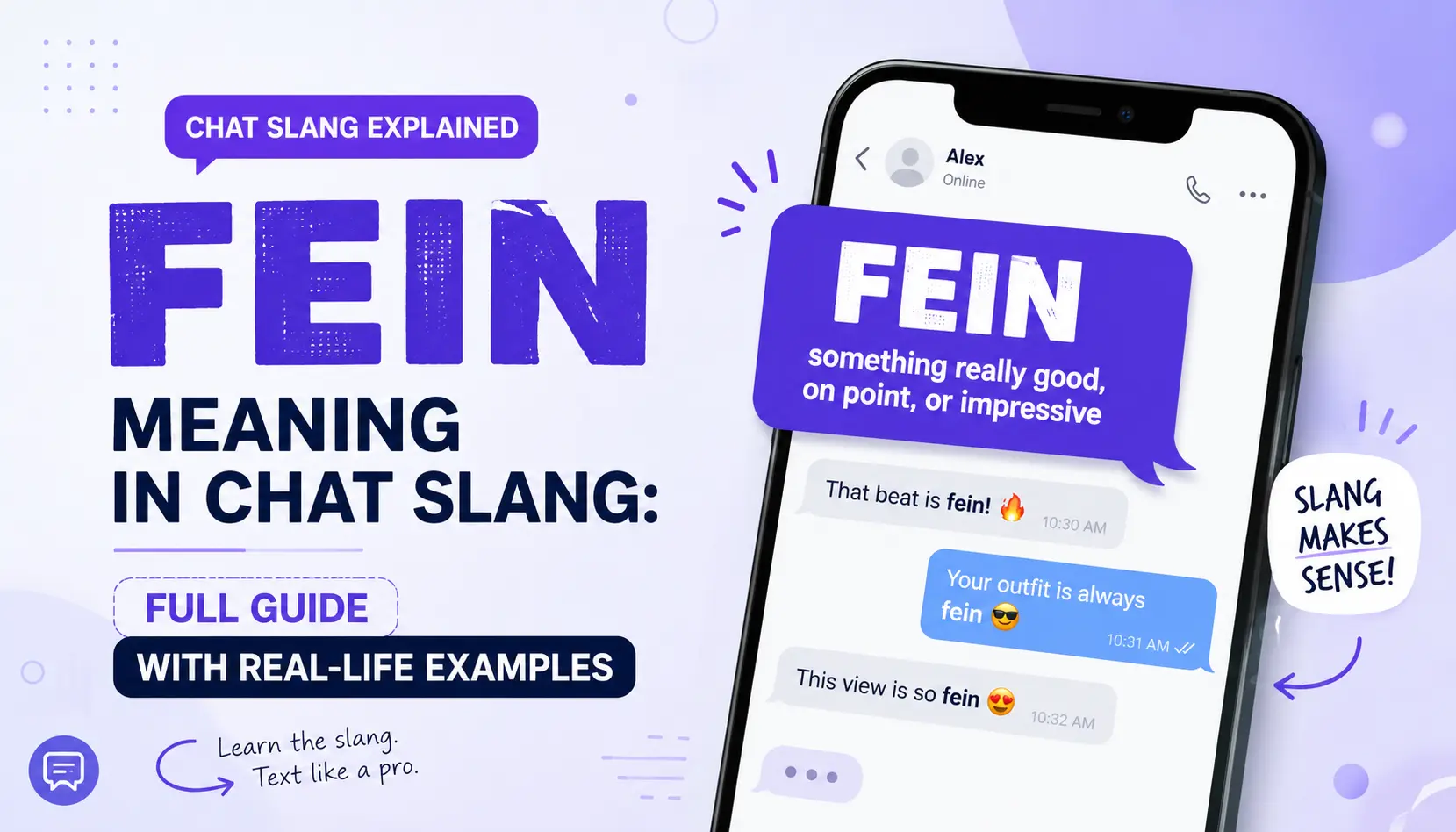
The search term “fein meaning” has gained massive popularity in recent years, especially due to its strong presence in social media, meme culture, and modern hip-hop music. At first glance, it may look like a simple slang word or typo, but its meaning actually depends heavily on context.
This is exactly why thousands of people search for the meaning online. The word has exploded across social media platforms, group chats, gaming communities, and meme culture. While it may seem like a brand-new Gen Z term, its roots go back much further than most people realize.
Today, “fein” is often used to describe someone who desperately wants, craves, or obsesses over something. The term can be playful, exaggerated, humorous, or occasionally serious depending on the situation. Because social media users frequently change spellings, you’ll also encounter variations such as “feining,” “fiending,” and other related forms.
Understanding this slang isn’t just about learning a trendy word. It’s about understanding how online communities communicate emotions, desires, and obsessions in a fast and expressive way.
This guide explains the complete fein meaning, where it came from, how people use it today, common misunderstandings, real-life examples, and everything else you need to know.
What Is Fein? Full Meaning Explained
The modern slang term “fein” generally refers to someone who strongly craves, wants, or obsessively desires something.
When someone says:
- “I’m feining for pizza.”
- “He’s a fein for that game.”
- “They’re feining for concert tickets.”
They usually mean that the desire is strong, intense, or difficult to ignore.
The current fein meaning comes from the slang word “fiend,” which historically referred to someone with an intense craving, especially for something addictive. Over time, internet culture modified the spelling and pronunciation, resulting in versions like “fein” and “feining.”
In modern chat slang, the word is often exaggerated for humor. A person doesn’t necessarily have a serious addiction. Instead, they’re emphasizing how much they want something.
For example:
- “I’m feining for coffee.”
- “He’s feining for the weekend.”
- “She’s feining for the new season of that show.”
In each example, the word expresses strong anticipation or desire.
Understanding the fein definition requires recognizing that context matters. Sometimes it refers to a harmless craving. Other times, it may describe obsessive behavior. The tone of the conversation usually reveals which meaning applies.
The Origin of Fein Slang
Many people assume “fein” was invented by TikTok or Gen Z users. That isn’t entirely true.
The word traces back to “fiend,” which has existed in English slang for decades. Historically, a fiend was someone intensely devoted to or obsessed with something.
Examples included:
- Coffee fiend
- Sports fiend
- Music fiend
- Gambling fiend
Over time, urban slang communities began using “fiending” to describe intense cravings.
Examples:
- “I’m fiending for food.”
- “He’s fiending for attention.”
As slang spread through social media, alternative spellings emerged. One of those spellings became “fein.”
Today, younger users often type:
- Fein
- Feining
- Feen
- Feenin
These variations all stem from similar slang roots.
The modern fein, meaning slang interpretation, remains connected to intense desire, craving, or obsession. Social media accelerated its popularity by rewarding short, expressive language that quickly communicates emotion.
TikTok, Snapchat, Instagram, and gaming communities helped transform the term into mainstream internet slang.
Read More! BOP Meaning: Definition, Uses, Examples, and Social Media Slang Explained
How Fein Is Used in Modern Chat Slang
The modern usage of “fein” revolves around expressing strong enthusiasm or desire.
People use it in several common ways.
1. Craving Something
This is the most common usage.
Examples:
- “I’m feining for tacos.”
- “I’m feining for a vacation.”
- “She’s feigning for iced coffee.”
The word emphasizes that the person really wants something.
2. Obsession With Entertainment
People frequently use it for media and entertainment.
Examples:
- “He’s feigning for the new Marvel movie.”
- “Everyone is feining for that album drop.”
3. Gaming Communities
Gamers often use the term jokingly.
Examples:
- “Bro is feigning for another match.”
- “They’re feining for rare skins.”
4. Social Media Humor
Many TikTok users exaggerate cravings for comedic effect.
Examples:
- “I’m feining for a nap.”
- “He’s feigning for attention again.”
The growing popularity of feining, meaning slang, demonstrates how internet communities constantly adapt language to make conversations more expressive.
Why Fein Became So Popular Online
Several factors contributed to the rise of “fein” in online culture.
Short and Easy to Type
Internet slang thrives on efficiency. “Fein” communicates a strong feeling with only four letters.
Highly Relatable
Everyone experiences cravings and obsessions.
Whether it’s:
- Food
- Sleep
- Games
- Music
- Shopping
People instantly understand the emotion behind the word.
Meme Culture
Modern meme culture rewards exaggeration.
Instead of saying:
“I really want pizza.”
Users write:
“I’m feining for pizza rn.”
The second version feels more dramatic and entertaining.
Viral Social Media Trends
Popular creators helped spread the term across platforms. Once enough influencers used it, the slang entered mainstream internet vocabulary.
As a result, searches for the meaning have increased significantly as more people encounter the term in comments, videos, and text conversations.
Fein vs Fiend: What’s the Difference?
One of the most common sources of confusion involves the relationship between “fein” and “fiend.”
Fiend
Traditionally means:
- Someone obsessed with something
- Someone who strongly craves something
Examples:
- Coffee fiend
- Exercise fiend
Fein
Modern internet variation used in texting and slang.
Examples:
- “I’m a fan of that show.”
- “He’s feining for another game.”
The underlying meaning is nearly identical.
However, “fein” often feels more casual, humorous, and social-media-driven.
The Fein definition has become less formal and more connected to internet culture than its original counterpart.
Real-Life Examples of Fein in Conversations
Here are realistic examples showing how people actually use the term.
Example 1: Food Craving
Friend A:
“What should we eat?”
Friend B:
“I’m feining for burgers.”
Meaning: Friend B strongly wants burgers.
Example 2: Gaming Session
Player 1:
“We’ve played for six hours.”
Player 2:
“One more game, bro, I’m feining.”
Meaning: The player really wants another match.
Example 3: New Music Release
Friend A:
“You staying up until midnight?”
Friend B:
“Yeah, I’m feining for that album.”
Meaning: They’re eagerly anticipating the release.
Example 4: Social Media Comment
“People are feigning for this update.”
Meaning: Many people desperately want the update.
Example 5: Weekend Plans
Coworker:
“Almost Friday.”
Friend:
“Good because I’m feining for the weekend.”
Meaning: They strongly want the weekend to arrive.
These examples show the practical, everyday use of fein, meaning slang,g in modern conversations.
Common Situations Where People Use Fein
The term appears frequently in certain contexts.
Entertainment
People use it for:
- Movies
- TV shows
- Concerts
- Streaming content
Food
One of the most common categories.
Examples:
- Pizza
- Coffee
- Ice cream
- Fast food
Relationships
Sometimes people jokingly describe emotional attachment.
Examples:
- “He’s feigning for her texts.”
- “She’s feigning for attention.”
Sports
Fans often use it during major events.
Examples:
- “Everyone is feining for kickoff.”
- “Fans are feining for the finals.”
The flexibility of the term contributes to the continued growth of Fein meaning searches.
Common Misconceptions About Fein
Misconception 1: It Always Means Addiction
Not true.
Most modern uses are playful exaggerations.
Misconception 2: It’s a New Word
The roots trace back decades through “fiend.”
Misconception 3: It Is Always Negative
Many uses are positive or humorous.
Misconception 4: Only Teenagers Use It
While younger users popularized it online, many age groups now recognize the term.
Misconception 5: Every Spelling Has a Different Meaning
Variations like:
- Fein
- Feining
- Feenin
- Fiending
Usually communicate the same basic idea.
Understanding these misconceptions helps clarify the true feining meaning slang users intend.
Comparison: Fein vs Other Popular Slang Terms
| Slang Term | Meaning | Typical Usage |
| Fein | Strong craving or obsession | “I’m feining for tacos.” |
| Obsessed | Extremely interested in something | “I’m obsessed with that show.” |
| Addicted | Strong attachment, sometimes serious | “I’m addicted to coffee.” |
| Craving | Wanting something strongly | “I’m craving pizza.” |
| Simping | Excessive admiration for someone | “He’s simping hard.” |
While these words overlap, “fein” usually carries a more playful and exaggerated internet tone.
When Not to Use Fein
Although common online, the term is not appropriate everywhere.
Avoid using it in:
Professional Emails
Example:
❌ “I’m feining for your response.”
Academic Writing
Example:
❌ “Students were feining for educational resources.”
Formal Business Communication
Example:
❌ “Our clients are feigning for updates.”
Instead, choose words like:
- eager
- interested
- anticipating
- looking forward to
Slang works best in casual conversations and social media settings.
How Social Media Changed the Meaning
Social media transformed “fein” from a niche slang term into a widely recognized internet expression.
Several changes occurred:
Increased Humor
People use it more dramatically than before.
Broader Applications
The term now applies to nearly any strong desire.
Faster Spread
Platforms allow slang to spread globally within days.
Multiple Spellings
Users create endless variations without changing the core meaning.
This evolution explains why searches for fein meaning continue to grow among people trying to keep up with modern internet language.
FAQ
What does fein mean in slang?
In modern slang, “fein” refers to someone who strongly wants, craves, or obsesses over something. It is often used humorously to exaggerate desire or excitement.
Is fein the same as fiend?
Essentially yes. “Fein” is a modern internet variation of “fiend.” Both describe strong cravings or obsessions, although “fein” feels more casual and social-media-oriented.
What does feining mean?
Feining refers to actively craving or strongly wanting something. For example, “I’m feining for coffee” means the person really wants coffee.
Is fein a negative word?
Not necessarily. While it can describe obsession, most online uses are playful, harmless, and exaggerated rather than negative.
Why do people say fein on TikTok?
TikTok encourages short, expressive language. “Fein” quickly communicates intense desire, excitement, or anticipation in a way users find entertaining.
Can fein refer to people?
Yes. Someone might say another person is “feigning for attention” or “feigning for texts,” meaning they strongly want interaction or validation.
Is fein appropriate in professional communication?
Generally no. It is considered casual internet slang and is better suited for conversations with friends, social media, or informal messaging.
Conclusion
The rise of internet culture has transformed countless words, and “fein” is one of the best examples. What began as a variation of “fiend” has evolved into a widely used slang term that describes strong cravings, excitement, anticipation, or obsession.
Understanding Fein’s meaning becomes much easier once you recognize that most modern uses are playful exaggerations rather than serious statements. Whether someone is talking about food, music, gaming, sports, or a new TV series, the word usually signals intense enthusiasm for something they really want.
As social media continues shaping language, terms like “fein” will likely remain a common part of online conversations. Knowing how and when people use it helps you understand modern digital communication and participate in it with confidence.
Love Me More! WAG vs Wag: Meaning, Usage & Key Differences Explained
