

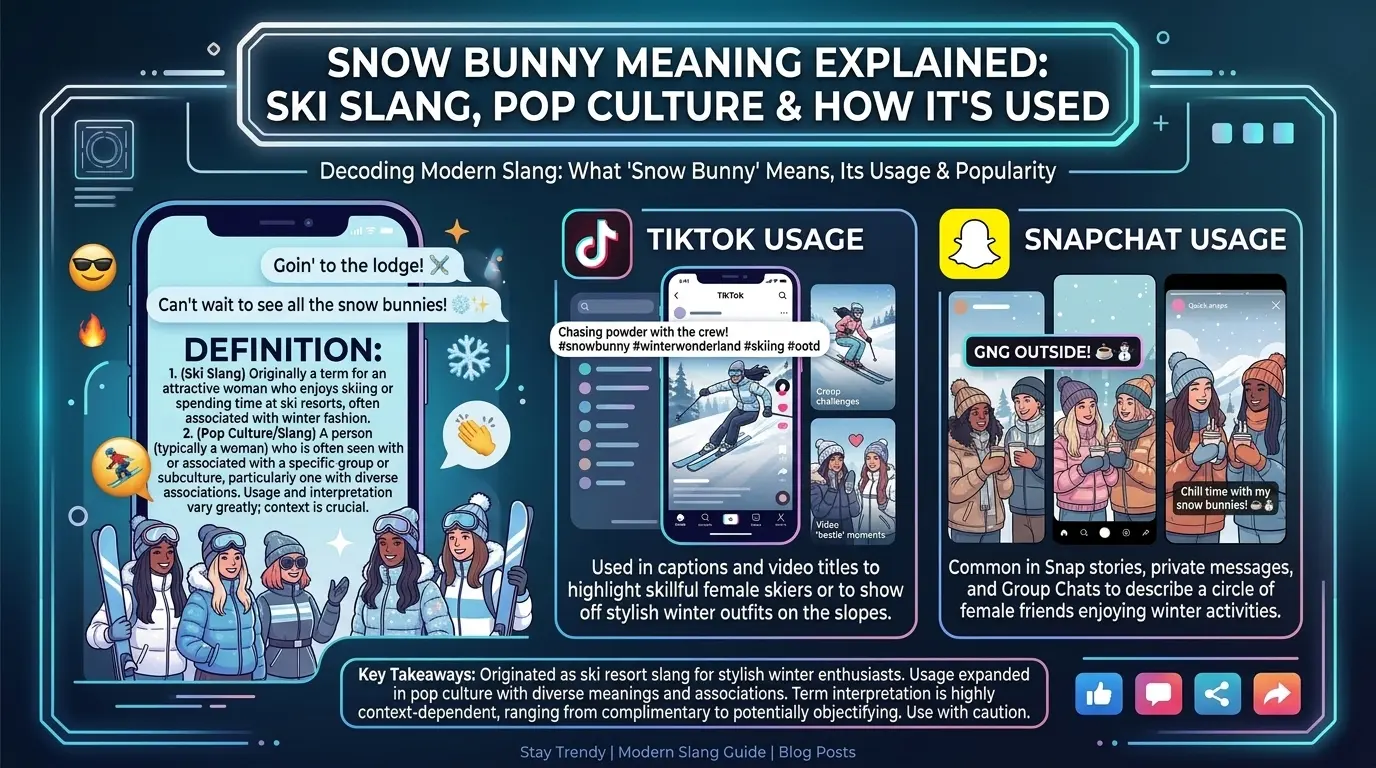
The snow bunny meaning has changed over time and can refer to different things depending on the context. Originally, the phrase was associated with people who enjoyed skiing and spending time at snowy resorts. Over the years, it expanded into pop culture, social media, music, and slang conversations, where it sometimes carries entirely different interpretations.
A group of friends is chatting after a ski trip when someone jokingly says, “Looks like you’ve become a snow bunny.” Everyone laughs, but one person pauses and asks, “Wait, what exactly does that mean?”
Because the term appears in movies, songs, online discussions, and everyday conversations, many people become confused about its actual definition. Some see it as a harmless winter sports nickname, while others recognize it as a phrase with cultural and social meanings beyond skiing.
Understanding the phrase requires looking at its history, its role in winter sports culture, and how internet users interpret it today. This guide breaks down the origins of the term, its different meanings, common misconceptions, and the ways people use it in modern conversations.
What Does Snow Bunny Mean?
The phrase “snow bunny” has several meanings depending on the situation. At its most traditional level, it refers to a person who enjoys spending time in snowy environments, especially around ski resorts and winter recreation areas.
Historically, the term was often used for beginner skiers who spent time on easier slopes. These individuals enjoyed the social atmosphere of ski resorts even if they were not highly skilled athletes.
The snow bunny meaning in this context is generally lighthearted and connected to winter activities.
For example:
- Someone who loves skiing every winter.
- A person who enjoys ski lodge culture.
- Someone frequently seen at snowy vacation destinations.
Over time, the phrase moved beyond skiing communities and entered popular culture. As that happened, additional meanings emerged.
Today, people may use the phrase:
- In winter sports conversations.
- In social media posts.
- In music lyrics.
- In slang discussions.
- In cultural commentary.
Because of these multiple uses, context is important. The same phrase can have different interpretations depending on who says it and where it appears.
The Origins of the Term Snow Bunny
The history of the phrase is closely tied to North American ski culture.
During the growth of recreational skiing in the mid-20th century, ski resorts became social destinations as well as sporting venues. People traveled to snowy mountain areas not only to ski but also to enjoy the atmosphere, fashion, events, and nightlife.
The nickname “snow bunny” began appearing as a playful way to describe individuals who loved spending time around ski resorts.
Unlike technical skiing terms, this phrase focuses more on lifestyle and participation.
For example:
A person might visit ski resorts every weekend, enjoy winter fashion, and spend time on beginner slopes.
Friends could jokingly call them a snow bunny.
The nickname was often associated with enthusiasm for winter recreation rather than elite athletic ability.
As ski culture expanded through movies, magazines, and tourism campaigns, the phrase became more widely recognized.
Many people encountered the term even if they had never visited a ski resort themselves.
This popularity helped the phrase move into mainstream language, where it eventually developed additional meanings beyond its original skiing roots.
Read more 200+ Crazy Would You Rather Questions: Hilarious, Wild, And Unpredictable Scenarios
Snow Bunny Meaning in Ski and Winter Sports Culture
Among winter sports enthusiasts, the phrase remains closely connected to skiing and snowboarding culture.
The snow bunny meaning is in this setting is usually harmless and descriptive.
A person may be called a snow bunny if they:
- Enjoy skiing frequently.
- Spend time at ski lodges.
- Love snowy vacations.
- Participate in winter sports communities.
- Prefer mountain destinations during winter.
The phrase often suggests enthusiasm rather than expertise.
For example:
Someone might ski only a few times each year but still love the overall experience of winter resorts.
They may enjoy:
- Snow-covered landscapes.
- Ski lodge gatherings.
- Winter photography.
- Après-ski activities.
- Snowboarding events.
In these cases, the term carries a positive and friendly tone.
It is similar to how people use words like:
- Beach lover
- Surf enthusiast
- Outdoor adventurer
The phrase highlights a person’s connection to a specific environment and lifestyle.
Winter tourism industries have also embraced imagery associated with snowy recreation, further reinforcing the connection between the term and mountain culture.
Snow Bunny Meaning in Pop Culture
As the phrase became more common, it started appearing on television, in films, music, and social media.
Pop culture often changes the meaning of words by introducing them to new audiences.
In entertainment media, the term sometimes describes someone associated with winter lifestyles, fashion, or snowy destinations.
The snow bunny’s meaning expanded because audiences interpreted the phrase differently depending on the story or context.
For example:
A movie character who spends every winter at luxury ski resorts might be described using the term.
A social media influencer posting frequent mountain vacation photos may receive similar comments.
In many cases, the phrase emphasizes:
- Winter aesthetics.
- Resort culture.
- Snow-focused lifestyles.
- Seasonal recreation.
Pop culture often exaggerates stereotypes for humor or storytelling.
Because of this, the phrase sometimes carries playful assumptions about someone’s hobbies, interests, or lifestyle choices.
However, those assumptions are not always accurate.
Someone can enjoy winter vacations without fitting every stereotype associated with the term.
How Social Media Uses the Phrase Today
Social media platforms frequently reshape slang and cultural expressions.
The phrase appears on:
- TikTok
- X (Twitter)
- Snapchat
Online users often apply it loosely, sometimes without reference to skiing at all.
A person posting snowy vacation photos might receive comments like:
“Snow bunny season.”
or
“Certified snow bunny.”
These comments generally refer to someone’s connection with winter activities or snowy environments.
The snow bunny’s meaning online often depends on visual context.
For example:
Photos featuring:
- Ski equipment
- Snow-covered mountains
- Winter fashion
- Resort vacations
Can trigger the use of the phrase in comments.
Internet culture tends to simplify language, which means users may apply labels broadly even when the original meaning was more specific.
As a result, people sometimes encounter the phrase online and assume it has only one definition when it actually has several.
Real-World Examples of Snow Bunny Usage
Understanding practical examples helps clarify how people use the phrase in everyday situations.
Example 1: Ski Resort Conversation
Friend 1:
“You’ve been skiing every weekend this winter.”
Friend 2:
“I know.”
Friend 1:
“You’re officially a snow bunny now.”
Meaning:
Someone who loves spending time skiing and visiting snowy destinations.
Example 2: Social Media Caption
Caption:
“Back in the mountains for another weekend.”
Comment:
“Total snow bunny!”
Meaning:
The commenter recognizes the person’s enthusiasm for snowy vacations.
Example 3: Winter Travel Blog
Travel Writer:
“I spend every January exploring ski resorts.”
Readers may describe the writer using the phrase because of their winter-focused lifestyle.
Example 4: Snowboarding Community
A beginner snowboarder attends events and spends time at mountain resorts.
Friends jokingly use the nickname because of their frequent participation.
Example 5: Winter Photography Account
An Instagram creator shares hundreds of snowy landscape photos each year.
Followers may associate them with winter culture and use the phrase in comments.
Common Mistakes and Misconceptions
Because the term has multiple interpretations, misunderstandings are common.
Mistake 1: Assuming There Is Only One Meaning
Many people believe the phrase refers exclusively to skiing.
While skiing remains an important part of its history, modern usage includes broader cultural interpretations.
Mistake 2: Believing Every Use Is Negative
Most uses are neutral or playful.
The meaning depends on context and tone.
In many conversations, the phrase is simply descriptive.
Mistake 3: Thinking It Always Refers to Athletic Skill
Someone does not need to be an expert skier to receive the nickname.
The phrase often focuses on lifestyle rather than performance.
Mistake 4: Ignoring Cultural Context
Different communities may use the phrase differently.
Understanding the surrounding conversation helps avoid confusion.
Mistake 5: Assuming Internet Usage Matches Historical Usage
Online slang often evolves beyond original definitions.
Social media may use the phrase more broadly than traditional ski culture.
Comparison: Snow Bunny vs Similar Terms
| Term | Main Meaning | Common Context |
| Snow Bunny | Winter enthusiast or ski culture participant | Skiing, winter recreation |
| Ski Bum | A person dedicated to the skiing lifestyle | Ski communities |
| Snowboarder | Someone who practices snowboarding | Sports |
| Winter Enthusiast | A person who enjoys winter activities | General recreation |
| Mountain Lover | A person who enjoys mountain environments | Travel and outdoor culture |
Snow Bunny vs Ski Bum
A ski bum is usually deeply committed to skiing and often organizes their life around the sport.
A snow bunny may simply enjoy the overall winter lifestyle.
Snow Bunny vs Winter Enthusiast
A winter enthusiast enjoys cold-weather activities broadly.
The phrase snow bunny carries stronger cultural associations with ski resort environments.
Snow Bunny vs Mountain Lover
Someone can love mountains year-round without participating in winter activities.
The phrase specifically connects to snowy settings.
Frequently Asked Questions
What does snow bunny mean?
The phrase generally refers to someone who enjoys snowy environments, ski culture, winter recreation, or spending time at mountain resorts. The exact meaning depends on context.
Is snow bunny a skiing term?
Yes. The phrase originally developed within skiing and winter sports culture before becoming more widely used in popular culture and online conversations.
What is the snow bunny meaning on social media?
Online users often use the phrase for people who frequently post winter vacation photos, skiing content, snowy landscapes, or mountain resort experiences.
Is snow bunny a compliment?
In many situations, yes. It is often used playfully or affectionately to describe someone who enjoys winter activities and snowy destinations.
Does the phrase always refer to skiing?
No. Modern usage includes broader associations with winter lifestyles, fashion, tourism, and social media content.
Why is the phrase popular in pop culture?
Movies, music, tourism advertising, and social media helped spread the phrase beyond ski communities, making it recognizable to a much larger audience.
Can someone be called a snow bunny without skiing?
Yes. Many people receive the nickname simply because they enjoy snowy vacations, winter fashion, mountain resorts, or cold-weather activities.
Conclusion
The snow bunny meaning traditionally refers to someone who enjoys skiing, snowy destinations, and winter recreation. Over time, the phrase expanded beyond ski culture and became part of pop culture, travel discussions, and social media conversations.
Today, the term can describe winter enthusiasts, ski resort regulars, or people strongly associated with snowy lifestyles. While interpretations vary depending on context, the phrase remains closely connected to winter activities and mountain culture.
Understanding how the term evolved helps explain why it appears in everything from ski resorts to Instagram captions. Context is always important, but in most situations, the phrase is used playfully, descriptively, or affectionately.
Love to read more: What does wyf stand for in text messages and slang use?
