

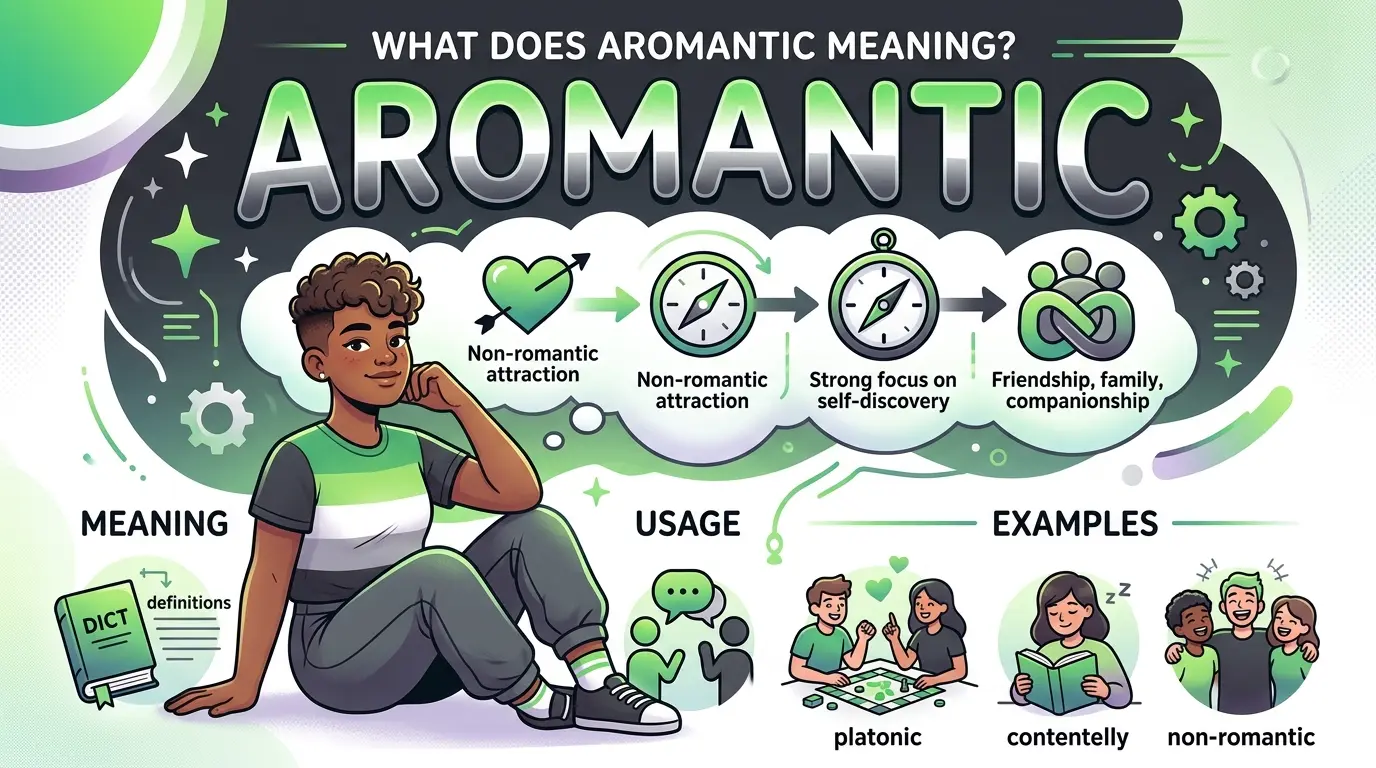
Romance gets treated like a universal experience, something everyone naturally craves at some point in life. But for a growing number of people, that assumption simply doesn’t match reality. Understanding aromantic meaning helps explain why some people don’t feel romantic attraction the way society expects them to, and why that’s a completely valid way to experience life.
This guide breaks down what being aromantic actually involves, where the term comes from, how it differs from related identities, and what everyday life looks like for people who identify this way.
What Is Aromantic?
Being aromantic means experiencing little to no romantic attraction toward others, regardless of gender. It’s a romantic orientation, separate from sexual orientation, and it exists on a spectrum rather than as a single fixed experience.
Some aromantic people still form deep, meaningful relationships. Others simply don’t feel pulled toward romance in the way most media and culture describe it. Neither version is wrong or incomplete.
Here’s what typically applies to someone who is aromantic:
- Little or no desire for romantic relationships
- Confusion or indifference toward romantic gestures that others find exciting
- Strong preference for friendships or platonic bonds over romantic ones
- No fear of romance, just a genuine lack of pull toward it
Grasping aromantic meaning starts with separating romantic attraction from things like affection, sexual desire, or wanting companionship. A person can care deeply about someone without wanting a romantic relationship with them.
Where the Term Comes From
The word “aromantic” combines the prefix “a-” (without) with “romantic.” It grew out of broader conversations within asexual communities during the early 2000s, when people began noticing that romantic attraction and sexual attraction don’t always move together.
Online forums and early asexuality awareness groups played a major role in shaping the vocabulary. As more people shared their experiences, it became clear that romantic orientation deserved its own language, separate from sexual orientation labels already in use.
This is part of why aromantic can be confusing for newcomers to the topic. It emerged from a specific community context, and mainstream awareness has only caught up in the last decade or so.
Aromantic vs. Asexual: Key Differences
These two terms get mixed up constantly, but they describe different things entirely.
Aromantic relates to romantic attraction. Someone who is aromantic doesn’t experience the desire to pursue romantic relationships.
Asexuality relates to sexual attraction. Someone who is asexual doesn’t experience sexual desire toward others.
A person can be one, both, or neither. Plenty of aromantic people experience sexual attraction and have active sex lives without any romantic component. Plenty of asexual people still want romantic partnerships, holding hands, dating, and long-term commitment, just without a sexual element.
The overlap between the two exists, which is why they’re often discussed together, but they answer completely different questions about a person’s attractions.
The Aromantic Spectrum
Not every aromantic person experiences things the exact same way. The spectrum includes several related identities:
Gray-Romantic
People who rarely experience romantic attraction, or experience it only under specific, limited circumstances.
Demiromantic
People who only develop romantic attraction after forming a strong emotional bond with someone first.
Recipromantic
People who only experience romantic attraction once they know the other person is attracted to them first.
Aroflux
People whose experience of romantic attraction shifts between aromantic and other points on the spectrum over time.
This range matters because it shows that aromantic meaning isn’t a single rigid box. It’s an umbrella term covering many different lived experiences, all connected by a reduced or altered relationship with romantic attraction.
Common Misconceptions About Being Aromantic
Misunderstanding tends to follow this identity around, mostly because romance is treated as a default part of adult life. Here are the most frequent misconceptions.
“Aromantic people are cold or emotionless.” Not true. Aromantic people feel love, joy, grief, and deep attachment just like anyone else. They simply don’t experience those feelings in a romantic context toward partners.
“They just haven’t met the right person yet.” This assumes romantic attraction is guaranteed to show up eventually. For many aromantic people, it never does, and that’s not a problem waiting to be solved.
“Aromantic means anti-relationship.” Many aromantic people are in queerplatonic partnerships, live with close friends, or build family structures without romance. They’re not against connection, just against the romantic framing of it.
“It’s the same as being single by choice.” Choosing to be single implies romantic attraction exists but isn’t being acted on. Aromanticism describes an absence of that attraction altogether, which is a different situation entirely.
What Everyday Life Looks Like
Day-to-day life for an aromantic person often looks fairly ordinary from the outside. They go to work, spend time with friends and family, pursue hobbies, and build careers, just like anyone else.
The differences show up in smaller ways:
- Holidays built around romance, like Valentine’s Day, may feel irrelevant or even a little alienating.
- Questions from relatives about “finding someone” can feel repetitive or intrusive.
- Friendships often carry the emotional weight that romantic relationships hold for other people.
- Media, movies, and songs centered on romantic love may simply not resonate.
Many aromantic people report feeling pressure to fake interest in dating just to avoid awkward conversations. Understanding aromantic meaning on a wider cultural level would reduce a lot of that unnecessary pressure.
How to Know If You Might Be Aromantic
No test or checklist gives a definitive answer, but a few patterns tend to show up in people exploring this identity:
- Romantic movies or songs never quite make sense emotionally, even when you understand them intellectually.
- Crushes, as other people describe them, don’t match anything you’ve personally felt.
- The idea of a romantic partner sounds more like an obligation than something exciting.
- You’ve dated before, but felt like you were performing a role rather than genuinely wanting the relationship.
None of these alone confirms anything. Self-identification is personal, and there’s no rush to land on a label. Some people spend years figuring out where they fit, and that’s completely normal.
Supporting an Aromantic Person
If someone close to you identifies as aromantic, a few things go a long way:
- Don’t treat it as a phase or something to fix.
- Avoid pushing them toward dating or setting them up with people.
- Ask how they define their own relationships instead of assuming.
- Respect their friendships and partnerships as equally valid, even without a romantic label attached.
Support mostly comes down to listening rather than trying to reinterpret their experience through a romantic lens.
Conclusion
At its core, aromantic meaning describes a lack of romantic attraction, existing on a wide spectrum rather than as one fixed experience. It’s separate from sexual orientation, shaped by decades of community conversation, and just as valid as any other way of relating to the people around you. Whether someone identifies as fully aromantic or somewhere along the gray or demiromantic spectrum, the common thread is simple: romance isn’t a requirement for a full, connected life.
Love to read more 250+ Naughty Would You Rather Questions Fun, Flirty & Engaging Game Ideas
Frequently Asked Questions
Is being aromantic the same as being asexual?
No. Aromantic meaning refers to a lack of romantic attraction, while asexual refers to a lack of sexual attraction. A person can identify as one, both, or neither.
Can an aromantic person fall in love?
Most aromantic people don’t experience romantic love, though some may feel strong platonic or familial love. A few describe rare exceptions under specific circumstances, which is common on the gray-romantic spectrum.
Do aromantic people ever get married?
Yes. Some aromantic people marry for companionship, shared life goals, or a queerplatonic partnership, even without romantic attraction driving the relationship.
Is aromanticism a mental health condition?
No. It’s a romantic orientation, not a disorder or diagnosis. Major psychological and medical associations don’t classify it as a condition requiring treatment.
Can someone be aromantic and still want children?
Yes. Wanting children isn’t tied to romantic attraction, so many aromantic people build families through partnership, co-parenting, or other arrangements that work for them.
How is demiromantic different from aromantic?
Demiromantic people can experience romantic attraction, but only after forming a close emotional bond first. Fully aromantic people generally don’t experience romantic attraction at all.
Can romantic attraction change over time for an aromantic person?
For some, yes. Aroflux individuals notice their experience shifting between aromantic and other points on the spectrum, though for many others, the experience stays consistent throughout life.
