

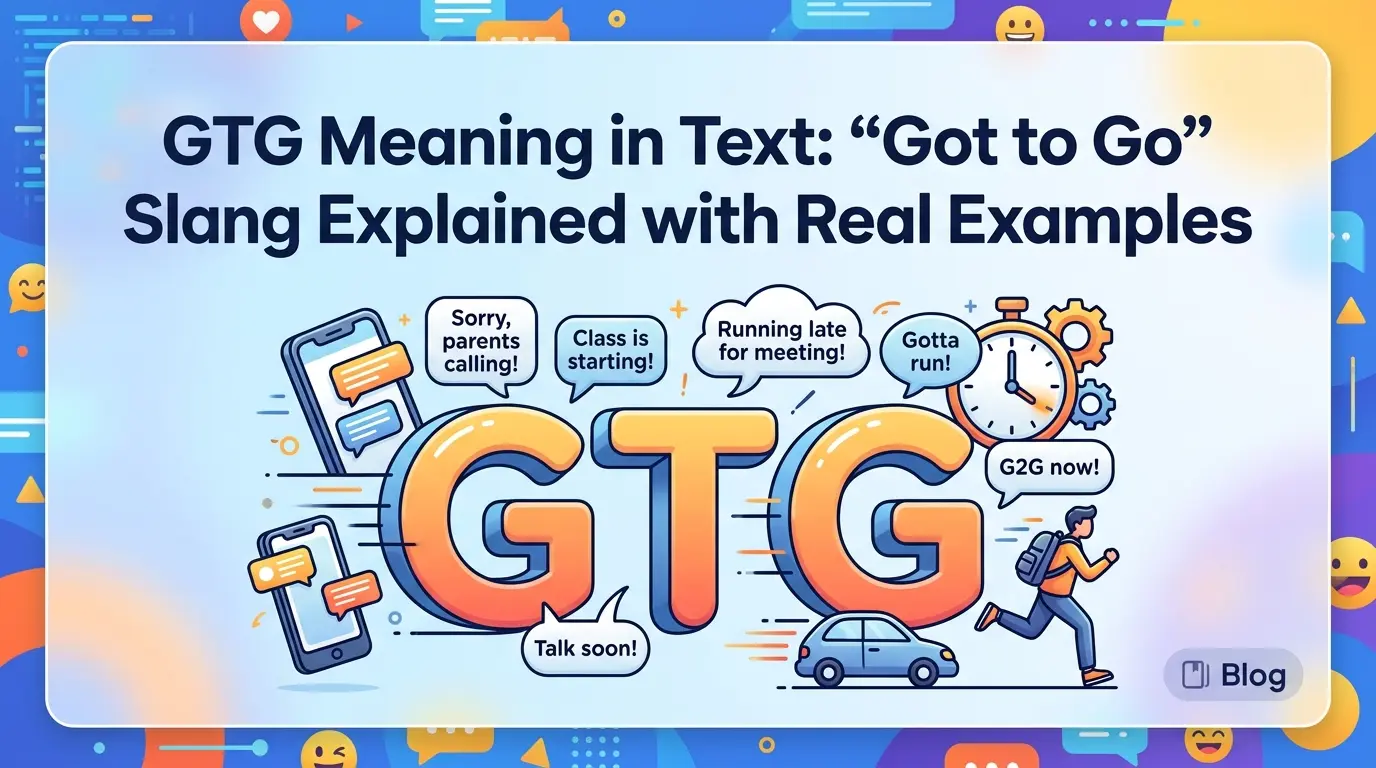
The gtg meaning in texting is “got to go” or “gotta go.” People use this abbreviation when they need to leave a conversation, stop what they are doing, or quickly tell someone they are unavailable. It is one of the most common shortcuts used in online chats, text messages, gaming conversations, and social media.
You are chatting with a friend; the conversation is going well, and suddenly they send a short message: “GTG.” If you have never seen the abbreviation before, it may look confusing. Are they ending the conversation? Are they busy? Is it something else?
“GTG, my class is starting.”
means:
“I have to go because my class is starting.”
Unlike a simple goodbye, GTG usually explains that someone needs to leave because of another activity or responsibility.
This abbreviation became popular because online communication often requires quick responses. Instead of typing a full sentence, users shorten common phrases to save time.
In this guide, we will explain the meaning, history, usage, examples, and differences between GTG and similar texting abbreviations.
What Does GTG Mean?
GTG is a texting abbreviation that usually stands for “Got To Go.” It is used when someone needs to leave a conversation, stop chatting, or move on to another activity.
The phrase is similar to saying:
- I have to leave.
- I need to go.
- I have something else to do.
- I cannot continue chatting right now.
The gtg meaning is simple, but the feeling behind it can change depending on the situation.
For example:
“GTG, dinner is ready.”
This is a normal reason for leaving a conversation.
“GTG, talk later.”
This is a friendly way to end a chat.
“GTG!!!”
Multiple exclamation marks may suggest urgency or excitement.
The abbreviation is commonly used in:
- Text messages
- WhatsApp chats
- Online games
- Discord conversations
- Social media messages
GTG became popular during the early days of online chatting because people wanted faster ways to communicate. Typing three letters was easier than writing “I have got to go.”
Over time, it became a standard internet abbreviation understood by many users.
Although the phrase is casual, it still communicates an important social message: the person is leaving but may continue the conversation later.
Why People Use GTG Instead of Writing “Got to Go”
The main reason people use GTG is speed.
Online conversations often happen quickly. People may be:
- Sending messages while traveling
- Talking between tasks
- Playing games
- Multitasking
- Using mobile devices
Typing a short abbreviation saves time.
Compare:
Full message:
“I have to go now because my meeting is starting.”
Short version:
“GTG, meeting starting.”
Both communicate the same idea, but the second version fits the fast style of online communication.
Another reason GTG became popular is that it creates a casual tone. When friends communicate, they usually do not need complete sentences.
Example:
Friend:
“Want to keep chatting?”
Reply:
“GTG, my mom needs me.”
This sounds natural and friendly.
GTG also helps avoid misunderstandings. Instead of suddenly disappearing from a conversation, someone can quickly explain why they are leaving.
For example:
Without GTG:
Friend stops replying.
The other person may wonder:
“Did they leave?”
With GTG:
“GTG, I’ll text you later.”
The message clearly shows that the conversation is ending temporarily.
GTG Meaning in Text Messages and Online Chats
Text messaging is one of the most common places where people use this abbreviation. Friends, family members, and online communities often use GTG when they need to leave quickly.
Examples:
Person A:
“Are you still online?”
Person B:
“GTG, I have homework.”
Meaning:
“I need to leave because I have homework.”
Another example:
Friend 1:
“Can we keep talking?”
Friend 2:
“GTG, my battery is dying.”
Meaning:
“I have to leave because my phone battery is almost empty.”
The abbreviation is especially useful in casual conversations where people already understand each other.
Common situations where someone may write GTG:
Leaving for School or Work
“GTG, class starts now.”
Going Somewhere
“GTG, my ride is here.”
Ending Late-Night Conversations
“GTG, I need sleep.”
Handling Responsibilities
“GTG, I have chores.”
The phrase does not always mean the person wants to end the relationship or avoid talking. It usually means they need to leave temporarily.
The tone depends on the additional words.
Compare:
“GTG.”
This can feel short or abrupt.
“GTG, talk tomorrow!”
This feels friendly.
“GTG, sorry, something came up.”
This shows the person still cares about the conversation.
GTG on WhatsApp and Messaging Apps
WhatsApp is one of the platforms where GTG is commonly used. Many users rely on abbreviations because messaging is often quick and informal.
People searching for the gtg meaning in WhatsApp usually want to know whether it has a special WhatsApp-specific meaning.
It does not.
On WhatsApp, GTG usually means the same thing:
“Got To Go.”
Examples:
Message:
“GTG, I’m getting on a call.”
Meaning:
“I need to leave this chat because I am joining a call.”
Message:
“GTG now, see you tomorrow.”
Meaning:
“I have to leave now, but we can talk later.”
WhatsApp users often combine GTG with other shortcuts:
- GTG, TTYL
- GTG, bye
- GTG, talk later
- GTG, see you soon
The abbreviation is popular because WhatsApp conversations are usually personal and informal. Friends and family members often use shorter expressions instead of complete sentences.
However, GTG is not always used only when physically leaving.
Sometimes people use it when they need to stop responding.
Example:
“GTG, I have work.”
The person may still be online, but they are saying they cannot continue chatting.
GTG Meaning on Social Media Platforms
Social media has made short abbreviations like GTG even more common because users often communicate through quick comments, direct messages, and short replies.
On platforms such as Instagram, Snapchat, TikTok, Discord, and Facebook Messenger, people use GTG when they want to leave a conversation without writing a long explanation.
For example:
Friend:
“Want to join our live stream?”
Reply:
“GTG, maybe later.”
Meaning:
“I need to go now, but I may join another time.”
The abbreviation works well on social platforms because conversations can happen at any time. Someone might be chatting while:
- Going to school
- Working
- Traveling
- Meeting friends
- Doing another activity
Instead of disappearing from a conversation, GTG gives a quick explanation.
Social media users also combine GTG with other internet expressions.
Examples:
- “GTG lol”
- “GTG ttyl”
- “GTG, see ya”
- “GTG rn”
These combinations create a casual and friendly ending.
The tone of GTG can change depending on the message around it.
Example:
“GTG bye.”
This is a simple goodbye.
“GTG 😭 my phone is dying.”
This feels playful and explains the reason.
“GTG, we’ll finish this later.”
This suggests the conversation will continue.
The gtg meaning stays the same across social platforms, but the emotion behind it depends on the situation and relationship between the people chatting.
GTG in Gaming Communities
Gaming is one of the biggest areas where the GTG meaning is used because players often need to leave quickly during online sessions.
A player may be in the middle of:
- A multiplayer match
- A team mission
- A live chat
- A Discord conversation
When they need to leave, they may type:
“GTG.”
In gaming, this usually means:
“I need to leave the game or conversation.”
Examples:
Player 1:
“Are you joining the next match?”
Player 2:
“GTG, dinner time.”
Meaning:
“I cannot join because I need to leave.”
Another example:
Player:
“GTG, my internet is acting up.”
Meaning:
“I have to stop playing because of connection problems.”
Gaming conversations often require fast communication, so abbreviations are extremely useful.
Other gaming-related shortcuts include:
- AFK — Away From Keyboard
- GG — Good Game
- BRB — Be Right Back
- GLHF — Good Luck Have Fun
Although some abbreviations describe specific situations, GTG focuses on leaving completely.
Compare:
“BRB.”
Means:
“I will return soon.”
“GTG.”
Means:
“I need to leave.”
For example:
During a game:
“I’m BRB, grabbing water.”
The player expects to come back.
“I’m GTG; my parents need me.”
The player is ending their session.
This difference is important because gaming communities often depend on clear communication.
How GTG Is Used in Different Situations
The meaning of GTG is simple, but people use it in many different situations.
Understanding the context helps identify the tone.
Leaving a Conversation
Example:
“GTG, I’ll message you later.”
Meaning:
“I need to leave this conversation now.”
Ending a Gaming Session
Example:
“GTG, thanks for playing!”
Meaning:
“I am leaving the game.”
Going Somewhere
Example:
“GTG, my bus is here.”
Meaning:
“I need to leave because my transportation arrived.”
Handling Responsibilities
Example:
“GTG, I have an assignment due.”
Meaning:
“I need to stop chatting and complete something important.”
Ending a Late-Night Chat
Example:
“GTG, I’m tired. Goodnight!”
Meaning:
“I need to sleep.”
Avoiding a Long Explanation
Sometimes people use GTG because they do not have time to explain everything.
Example:
“GTG, something came up.”
This means:
“I need to leave because of an unexpected situation.”
The person may explain later.
Real-World Examples of GTG Usage
Examples show how naturally this abbreviation appears in everyday conversations.
Example 1: Friends Texting
Alex:
“Want to keep talking?”
Sam:
“GTG, my parents are calling me.”
Meaning:
Sam needs to leave the conversation.
Example 2: WhatsApp Group Chat
Message:
“GTG, everyone, meeting starts soon.”
Meaning:
The person is leaving because another activity is beginning.
Example 3: Gaming Chat
Player 1:
“One more match?”
Player 2:
“Sorry, GTG.”
Meaning:
The player cannot continue playing.
Example 4: School Conversation
Student A:
“Can you help me study later?”
Student B:
“Sure, but GTG now.”
Meaning:
The student needs to leave at the moment.
Example 5: Social Media DM
Person A:
“Are you still online?”
Person B:
“GTG, I’m heading out.”
Meaning:
The person is leaving.
Example 6: Family Message
Parent:
“Can you talk?”
Reply:
“GTG, I’m cooking.”
Meaning:
The person cannot continue chatting because they are busy.
Example 7: Online Community
User:
“GTG guys, see you tomorrow!”
Meaning:
The person is leaving the group conversation.
Common Mistakes and Misconceptions About GTG
Although GTG is widely understood, some users misunderstand its purpose or tone.
Mistake 1: Thinking GTG Means Goodbye Forever
GTG does not usually mean the relationship or conversation is ending permanently.
It normally means:
“I need to leave for now.”
Example:
“GTG, talk later.”
This clearly suggests future communication.
Mistake 2: Confusing GTG With BRB
GTG and BRB are different.
GTG:
“I have to leave.”
BRB:
“I am leaving temporarily but will return soon.”
Example:
“BRB, getting food.”
The person plans to come back.
“GTG, dinner is ready.”
The person is ending the conversation.
Mistake 3: Assuming GTG Is Always Rude
Some people think short messages seem unfriendly.
However, GTG is often just a quick way to communicate.
Compare:
“GTG.”
Short and direct.
“GTG, sorry, talk later!”
More friendly.
Adding a few extra words can change the tone completely.
Mistake 4: Using GTG in Formal Communication
GTG is casual slang.
It works well in:
- Personal texts
- Gaming chats
- Social media
It is not recommended for:
- Work emails
- Business messages
- Official communication
Instead of:
“GTG now.”
A professional message could say:
“I need to leave now.”
Mistake 5: Thinking GTG Has Only One Meaning
The most common meaning is “Got To Go,” but abbreviations can sometimes have different meanings in specific communities.
Always consider the conversation topic before assuming.
For example:
A casual chat about leaving:
GTG = Got To Go
A specialized industry discussion:
GTG could mean something else.
Comparison Section: GTG vs Similar Texting Abbreviations
Many internet abbreviations look similar because they are all used to make conversations faster. However, each one communicates a different idea.
Understanding the differences helps you choose the right abbreviation for the situation.
| Abbreviation | Full Form | Main Purpose | Example |
| GTG | Got To Go | Leaving a conversation | “GTG, dinner is ready.” |
| BRB | Be Right Back | Temporarily leaving | “BRB, getting water.” |
| TTYL | Talk To You Later | Ending the conversation for now | “I have to study. TTYL.” |
| AFK | Away From Keyboard | Not available online | “AFK for 10 minutes.” |
| CYA | See You | Casual goodbye | “CYA tomorrow.” |
| Bye | Goodbye | Direct farewell | “Bye, talk later.” |
GTG vs BRB
GTG and BRB are often confused because both involve leaving.
The difference is whether the person plans to return soon.
GTG:
“I need to leave.”
Example:
“GTG, my class is starting.”
The person is ending the conversation.
BRB:
“I will return shortly.”
Example:
“BRB, answering the door.”
The person expects to come back.
A simple way to remember:
- GTG = leaving
- BRB = temporary absence
GTG vs TTYL
Both can appear at the end of conversations, but their meanings are different.
GTG focuses on the reason for leaving.
Example:
“GTG, I have homework.”
TTYL focuses on future communication.
Example:
“TTYL, talk tomorrow.”
People often combine them:
“GTG, TTYL.”
Meaning:
“I have to leave now, but we will talk later.”
GTG vs AFK
These terms are common in gaming communities.
AFK means someone is away from their device or keyboard.
Example:
“AFK for five minutes.”
The person may still be part of the conversation but is temporarily unavailable.
GTG means the person is leaving.
Example:
“GTG, I’m done playing.”
They are ending their activity.
GTG vs Goodbye
A simple goodbye only says farewell.
GTG gives a reason or explanation.
Compare:
“Bye.”
“I’m leaving.”
“GTG, my ride is here.”
“I need to leave because something is happening.”
The second message provides more information.
This is why many people prefer GTG in casual chats. It sounds natural and explains why someone is disappearing.
Why GTG Remains Popular in Online Communication
The popularity of GTG comes from its simplicity. It solves a common problem in digital conversations: people often need a quick way to leave without sounding rude.
Imagine someone is chatting with a friend but suddenly needs to:
- Answer a phone call
- Attend a class
- Finish work
- Go somewhere
- Help someone
Instead of typing a long explanation, they can write:
“GTG, I’ll talk later.”
This short message communicates three things:
- They are leaving.
- They are not ignoring the conversation.
- They may return later.
The abbreviation also works across different age groups and platforms. Although younger internet users often use many new slang terms, GTG has remained recognizable because the phrase solves a universal communication need.
People have always needed ways to end conversations politely. Digital communication simply created shorter versions.
The gtg meaning became popular because it combines speed, clarity, and friendliness in only three letters.
Frequently Asked Questions
What does GTG mean in texting?
GTG usually means “Got To Go” in texting. People use it when they need to leave a conversation, stop chatting, or move on to another activity. For example, “GTG, my class starts soon” means the person needs to leave because their class is beginning.
What is the meaning of gtg in WhatsApp?
The gtg meaning in WhatsApp is the same as in regular texting: “Got To Go.” WhatsApp users use it when they need to end a chat quickly, leave a group conversation, or tell someone they are unavailable at the moment.
Is GTG rude?
No, GTG is not usually considered rude. It is simply a quick way to say someone needs to leave. The tone depends on the surrounding message. Adding phrases like “talk later” or “sorry” can make it sound warmer and more polite.
Does GTG mean goodbye?
GTG does not exactly mean goodbye, although it can be used when ending a conversation. It means “Got To Go,” which explains that someone needs to leave. The person may continue the conversation later.
What is the difference between GTG and BRB?
GTG means someone is leaving and usually ends the current conversation. BRB means “Be Right Back,” which indicates a short temporary absence. Someone using BRB plans to return soon, while someone using GTG is usually finished for now.
Can GTG be used professionally?
GTG is considered casual internet slang, so it is best for personal messages, gaming chats, and social media. In professional communication, it is better to use complete phrases such as “I need to leave now” or “I have to go.”
Why do people use GTG instead of writing the full phrase?
People use GTG because it is shorter and faster to type. Online conversations often move quickly, and abbreviations help users communicate efficiently. The shortcut also creates a casual tone that fits friendly chats and digital conversations.
Conclusion
The gtg meaning in text is “Got To Go,” a popular abbreviation people use when they need to leave a conversation or stop an activity. Whether it appears in a WhatsApp message, gaming chat, or social media conversation, it usually means someone has to leave at that moment.
GTG became popular because it is quick, simple, and easy to understand. It allows people to end conversations politely without writing a long explanation.
Although it is mainly used in casual communication, understanding abbreviations like GTG helps you follow modern online conversations more easily. When you see “GTG,” remember that it usually does not mean someone is ignoring you—it simply means they need to go.
