

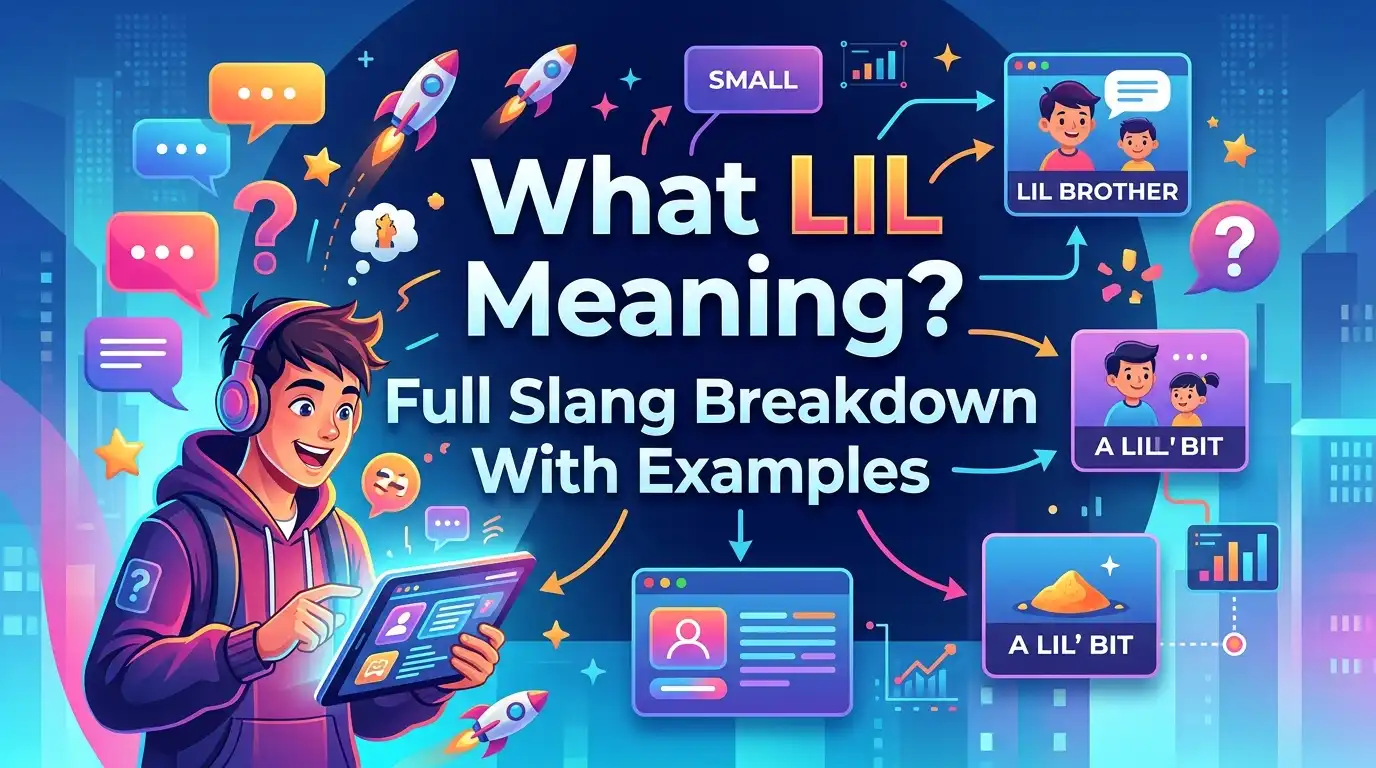
Unlike many online abbreviations that appear and disappear quickly, “lil meaning” has stayed popular for decades. It moved from everyday speech into hip-hop, texting, memes, gaming chats, and social media captions. People use it because it sounds casual and friendly compared with the full word “little.”
A friend sends you a message saying, “I’m just a lil tired,” or you see an artist’s name like “Lil Wayne” or “Lil Baby” and wonder why the word appears everywhere. The short form may look simple, but the little meaning changes depending on where you see it. It can describe something small, add a playful tone, show affection, or become part of someone’s identity in music and internet culture.
Understanding this slang helps you read conversations more naturally and avoid confusion when you see it in usernames, lyrics, comments, or messages. This guide explains the history, different uses, and examples that show how this small word became a major part of modern communication.
What Does Lil Mean?
The word “lil” is a shortened spelling of “little.” It is commonly used in informal communication, especially in text messages, online conversations, music, and social platforms. The shortened version removes letters but keeps the same basic pronunciation.
The lil meaning usually connects to something small, young, or less significant in size. For example, someone might write “I need a lil break” instead of “I need a little break.” In this sentence, it does not mean the break is unimportant. It simply creates a relaxed and conversational feeling.
People also use this term to make statements sound softer. Saying “I have a lil problem” often feels less serious than saying “I have a problem.” The speaker may be trying to sound casual or avoid making a situation seem dramatic.
The spelling became especially common because online communication often favors shorter words. Similar examples include “u” for “you,” “tho” for “though,” and “pls” for “please.” However, unlike many texting shortcuts, “lil” became part of the broader culture rather than remaining only an internet abbreviation.
Today, it appears in casual messages, song titles, brand names, and nicknames. Its meaning depends heavily on context, which is why understanding the situation around the word matters.
Why Do People Use Lil Instead of Little?
One reason “lil” became popular is that it creates a more personal and relaxed style. When someone writes normally, the full word “little” may sound more formal. The shortened version feels closer to spoken conversation.
For example:
- “I’m a little nervous” sounds more standard.
- “I’m a lil nervous” sounds like someone casually sharing a feeling with a friend.
The difference is not about grammatical accuracy. Instead, it is about tone. Online communication often tries to copy the way people speak naturally. The spelling “lil” captures that informal sound.
Another reason is character limits and typing speed. Early texting platforms had strict limits on message length, so shortened words became useful. Although modern apps no longer have the same restrictions, many shortened forms remain because people enjoy the style they create.
The term also carries emotional meaning. Someone might say:
- “My lil brother”
- “My lil dog”
- “My lil project”
In these cases, it can express affection rather than only size. A person may use it to show closeness or care.
The little meaning can also depend on the relationship between speakers. Friends may use it jokingly, while a parent may use it affectionately. A person describing a “lil mistake” may be minimizing the issue, while calling someone “lil champ” can be encouraging.
The Origin of Lil Slang
The history of “lil meaning” goes beyond internet culture. The abbreviation developed from ordinary spoken English, where people naturally shorten words during conversation.
In many languages, shortened forms appear because people prefer faster and easier speech patterns. English speakers have long used informal versions of words, such as “gonna” instead of “going to” and “wanna” instead of “want to.” “Lil” follows a similar pattern.
The word became especially recognizable through hip-hop culture. During the late 20th century, many rappers adopted “Lil” as part of their stage names. It often represented youth, personality, or a connection to earlier artists.
Names such as Lil Wayne and Lil Kim helped make the term widely recognized around the world. Many newer artists continued the tradition, using “Lil” as part of their public image.
In music culture, the term does not always suggest someone is literally small or young. Instead, it can function like a nickname or branding choice. It may represent style, creativity, or connection to a specific community.
This cultural influence helped move the word from everyday speech into usernames, gaming profiles, and social media identities. A person using “Lil” before a nickname may simply be creating a playful online identity.
Lil Meaning in Text Messages and Social Media
In texting, “lil” is usually used as a casual replacement for “little.” It makes messages feel shorter, friendlier, and less formal.
Examples:
“I need a lil help with this.”
Meaning: I need a little help with this.
“Give me a lil time.”
Meaning: Give me a little time.
“That was a lil weird.”
Meaning: That was slightly weird.
In social media captions, people often use it to create a playful or humorous style. A person posting a photo might write “my lil adventure” or “a lil weekend trip” even if the event is not actually small.
The term can also be used sarcastically. Someone might write “a lil problem” when they actually mean a very serious situation. The contrast creates humor because the speaker intentionally makes something sound smaller than it is.
For younger internet users, the word has become part of a broader online writing style. Similar to emojis and abbreviations, it helps communicate personality. A sentence written with “lil” may feel warmer and more casual than the same sentence using “little.”
The little meaning in digital conversations is therefore not only about size. It is also about emotion, tone, and the relationship between people communicating.
Lil in Hip-Hop and Pop Culture
The popularity of “lil” grew significantly through music, especially hip-hop culture. While the word originally functioned as a simple shortened form of “little,” artists transformed it into a recognizable part of their names and personal brands.
In rap culture, adding “Lil” before a name often became a way to create an identity. It could suggest youth, confidence, connection to a neighborhood, or respect for older influences. The word does not always describe someone’s physical size. Instead, it can represent personality and artistic style.
Artists such as Lil Wayne, Lil Nas X, and Lil Baby show how the term became more than a casual abbreviation. Their stage names helped introduce the word to audiences who may not have used it in everyday conversation.
The lil meaning in music culture is often connected to branding rather than a direct definition. A performer named “Lil” followed by another word, is not necessarily saying they are small or younger. Instead, it creates a memorable name that fits the artist’s image.
The trend also influenced online usernames. Many people use “Lil” before a nickname because it sounds familiar and playful. For example:
- LilShadow
- LilDragon
- LilArtist
- LilGamer
These names are usually chosen for style rather than meaning.
The connection between music and internet culture made “lil” one of the rare slang terms that successfully moved between generations. Older listeners recognize it from music, while younger users often see it in gaming names, memes, and social media posts.
Lil Meaning on TikTok, Instagram, and Online Platforms
Social media has changed how people use informal language. Words that once appeared mainly in conversations or music often become part of captions, comments, and viral trends. “Lil” is one of those terms that adapted easily to online communication.
On platforms like TikTok and Instagram, users often add “lil” to make their posts sound more natural. It creates a relaxed tone and can make ordinary moments seem more personal.
Examples:
“A lil coffee break before work.”
Meaning: A small or simple coffee break.
“My lil cousin learned to drive today.”
Meaning: A younger cousin or a cousin the speaker feels affection toward.
“Just a lil update.”
Meaning: A short update.
The word often makes content feel less serious. A creator saying “a lil announcement” may be preparing followers for something important but wants to sound approachable.
The little meaning on social media can also depend on humor. Internet users frequently use understatement as a joke. Someone might post a picture of a huge project and caption it “just a lil thing I made.” The humor comes from pretending something impressive is ordinary.
This style is common online because users want their posts to feel authentic instead of overly professional. Informal words help create a conversational connection with followers.
However, context matters. A person using “lil” in a professional email may appear too casual, while the same word in a friend’s message feels completely normal.
Lil Meaning in Gaming Communities
Gaming communities often create their own language styles, and “lil” has become common in usernames, chats, and player interactions.
Gamers frequently use shortened words because communication during matches needs to be quick. A player typing during a fast game may prefer short expressions instead of complete sentences.
Examples include:
- “Need a lil backup.”
- “That was a lil risky.”
- “Give me a lil sec.”
These messages are faster to type while still sounding friendly.
In gaming usernames, “Lil” is often used as a nickname style. A player might choose a name like “LilKnight” or “LilWizard” because it sounds memorable and fun. The name does not necessarily describe their skill level or age.
The term can also create a humorous contrast. A highly skilled player might use a name containing “Lil,” creating an unexpected image. For example, a top-ranked player called “LilNoob” may use the name as a joke.
Gaming communities value personality, and small language choices help players show their style. Words like “lil” contribute to the casual environment found in many online games.
The lil meaning in gaming is usually connected to friendliness, creativity, or identity rather than the literal meaning of “small.”
Real-World Examples of Lil Used Correctly
Understanding slang becomes easier when looking at realistic situations. Here are examples showing different ways people use this term.
Example 1: Casual Conversation
Message:
“Can you give me a lil advice before my interview?”
Meaning:
The person wants some advice but uses a softer expression to make the request feel casual.
Example 2: Showing Affection
Message:
“My lil sister graduated today.”
Meaning:
The speaker may mean their younger sister, but the phrase can also show affection even if the sister is an adult.
Example 3: Social Media Caption
Caption:
“Made a lil change to my room.”
Meaning:
The person made a small change, although the actual change could be bigger.
Example 4: Music Reference
Name:
Lil Artist Name
Meaning:
The “Lil” part is likely part of a stage identity rather than a description of size.
Example 5: Gaming Chat
Message:
“Wait a lil, I’m coming.”
Meaning:
The player is asking someone to wait briefly.
These examples show why context is important. The same word can communicate size, affection, humor, or personal style depending on the situation.
Common Mistakes and Misconceptions About Lil
Although “lil” looks simple, people sometimes misunderstand how it works. Here are common mistakes.
Mistake 1: Thinking Lil Always Means Small
The most common misunderstanding is assuming the word always refers to physical size.
Example:
“My lil brother”
This can mean a younger brother, but it may also express closeness. A person might still call their adult sibling “lil bro” because the phrase represents their relationship.
Mistake 2: Believing Lil Is Only Internet Slang
Some people think the word was created by social media users. In reality, shortened forms of words have existed in spoken language for a long time.
Online platforms helped spread the term, but its roots come from everyday informal speech.
Mistake 3: Using Lil in Formal Writing
The word works well in casual situations, but it usually does not belong in formal writing.
For example:
Casual:
“I had a lil issue with my phone.”
Formal:
“I experienced a minor issue with my phone.”
Choosing the correct style depends on the audience.
Mistake 4: Assuming Every Lil in a Name Has the Same Meaning
A musician, gamer, or online creator may use “Lil” as part of a nickname without intending the original meaning of “little.”
Names often develop meanings beyond their individual words.
Lil vs Little: What Is the Difference?
The main difference between “lil” and “little” is formality and tone.
| Word | Usage | Tone |
| Little | Standard English | Neutral or formal |
| Lil | Informal slang | Casual, playful, friendly |
Examples:
Little:
“I have a little problem.”
Lil:
“I have a lil problem.”
Both sentences communicate a similar idea, but the second feels more relaxed.
The shortened version is especially common in messages because texting encourages quick, conversational writing. People often choose words based not only on meaning but also on the feeling they create.
The little meaning becomes clearer when you consider the speaker’s intention. It can make something feel smaller, softer, cuter, or less serious.
Frequently Asked Questions About Lil
What does lil mean in texting?
In texting, “lil” usually means “little.” People use it as an informal spelling that makes messages sound casual and conversational. It can describe something small, a short amount of time, or something the speaker feels affection toward.
Is lil a real word?
“Lil meaning” is not generally considered standard formal English, but it is widely recognized as slang. It appears frequently in texts, social media posts, music, and online conversations.
Does lil mean young?
Sometimes it can refer to someone younger, such as “my lil brother,” but it does not always mean young. The word can also express affection, humor, or style.
Why do rappers use Lil in their names?
Many rappers use “Lil” as part of their stage names because it became associated with hip-hop identity and branding. It may connect to youth, influence, personality, or simply create a memorable name.
Can I use lil in professional writing?
It is usually better to avoid “lil” in professional writing. Emails, reports, and formal documents should use “little” or another standard word instead.
Does lil mean the same thing everywhere?
The basic idea remains similar, but the meaning can change depending on context. In a message, it may mean “small.” In a username, it may simply be part of someone’s identity.
Conclusion
The lil meaning is more than just a shortened spelling of “little.” It has become a flexible slang term used to express size, affection, humor, and personality. From everyday texting to hip-hop culture and online communities, “lil” has developed many uses beyond its original definition.
When someone writes “a lil break,” “my lil brother,” or uses “Lil” as part of a nickname, the intended meaning depends on context. It can make language feel more casual, friendly, and personal.
As online communication continues to evolve, slang terms like this show how small language changes can create new ways for people to connect. Knowing how and when to use “lil” helps you understand conversations across social platforms, music, and everyday life.
