

A driver looks down at their phone for just a few seconds, runs a red light, and causes a fatal accident. In another situation, a heated argument suddenly turns violent, leading to a death that no one planned. Both cases involve the loss of human life, but they may not be classified as murder. This is where understanding the meaning of manslaughter becomes important.
In legal terms, manslaughter generally refers to causing the death of another person without the level of intent or premeditation that usually exists in murder cases. While laws differ between countries and jurisdictions, the concept is often divided into categories such as voluntary manslaughter and involuntary manslaughter.
Many people hear the word in crime reports, court cases, television shows, and legal discussions, but remain unsure about what it actually means. Some assume it is simply a lesser form of murder, while others confuse it with accidents that carry no criminal responsibility.
This guide explains the legal definition, major types, real-life examples, differences from murder, common misunderstandings, and frequently asked questions using clear and simple language.
What Is Manslaughter?
The legal concept generally refers to unlawfully causing another person’s death without the specific intent that typically defines murder.
The meaning of manslaughter varies slightly depending on jurisdiction, but most legal systems recognize it as a criminal homicide offense that lacks certain elements required for a murder conviction.
The key distinction often involves intent.
In many murder cases, prosecutors must show that the accused intentionally caused death or acted with extreme disregard for human life.
Manslaughter cases usually involve:
- Recklessness
- Criminal negligence
- Heat-of-the-moment actions
- Lack of premeditation
- Reduced intent
For example:
A person may intentionally strike someone during an argument without planning to kill them. If death results, the offense may be classified differently from a preplanned homicide.
Similarly, someone who acts with serious negligence may cause a fatal accident that leads to criminal charges even though there was no intention to kill.
Because every case depends on specific facts, courts carefully analyze the circumstances surrounding the death.
The Main Types of Manslaughter Meaning
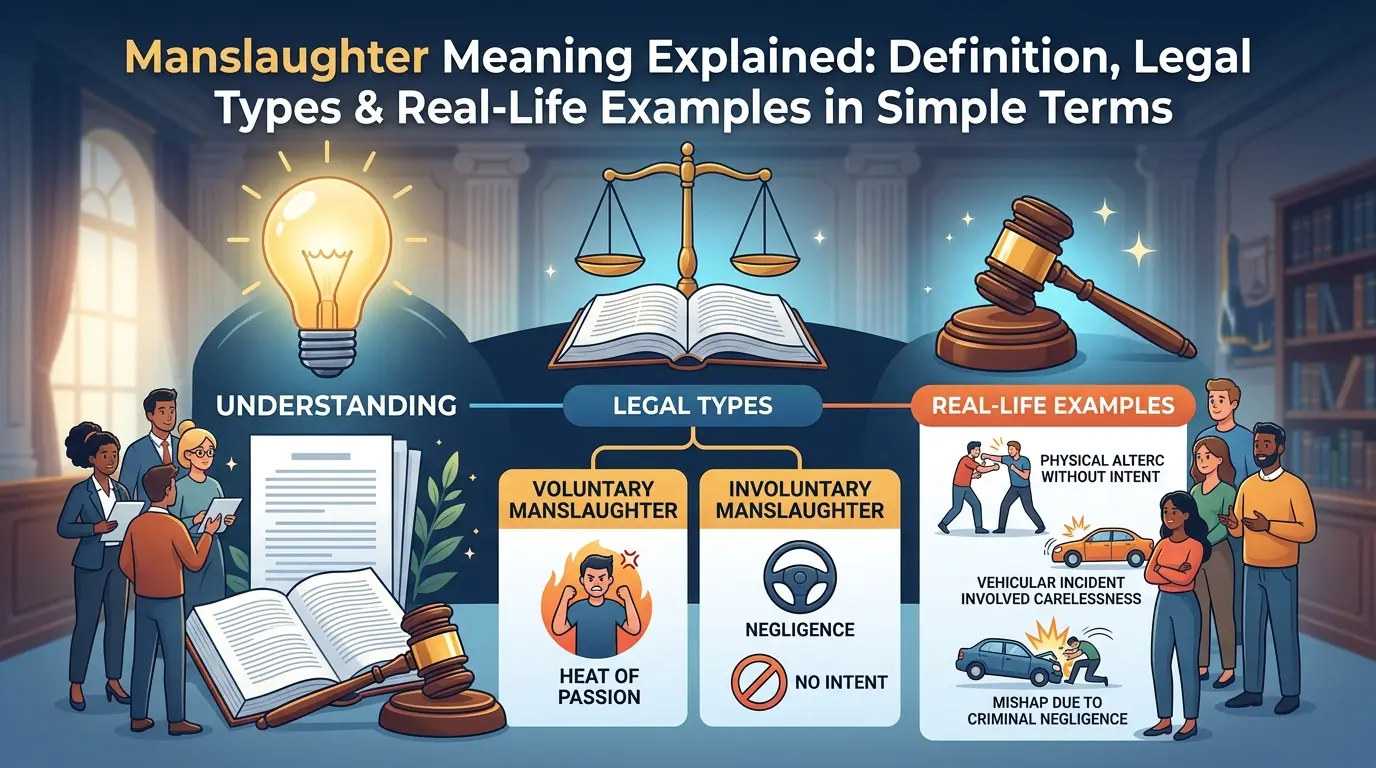
Most legal systems divide the offenses into two major categories.
Voluntary Manslaughter
Voluntary manslaughter generally involves an intentional act committed under circumstances that reduce moral blame compared to murder.
Common situations include:
- Extreme emotional disturbance
- Sudden provocation
- Heat-of-passion incidents
A classic example involves discovering a spouse in a highly emotional situation and immediately reacting violently.
The law does not excuse the conduct.
However, it may recognize that the person acted in an intense emotional state rather than through careful planning.
The meaning of manslaughter often becomes clearer when compared with murder because voluntary cases usually involve intent to harm but lack premeditation.
Involuntary Manslaughter
Many people ask, what does involuntary manslaughter mean?
In general, it refers to causing a death through reckless or criminally negligent behavior without intending to kill.
Examples may include:
- Dangerous driving
- Reckless handling of weapons
- Severe negligence
- Unsafe workplace practices
In these situations, the person did not plan or desire the death.
However, their actions created an unreasonable risk that led to a fatal outcome.
Courts often focus on whether a reasonable person would have recognized the danger.
Read more Sadistic Meaning: What This Word Actually Means
Understanding Voluntary Manslaughter in More Detail
Voluntary manslaughter is frequently misunderstood because people assume any intentional act causing death automatically qualifies as murder.
The law is more nuanced.
The manslaughter meaning in voluntary cases often involves a loss of self-control triggered by extraordinary circumstances.
Several factors may be considered:
Sudden Provocation
The reaction must generally occur immediately after the provoking event.
Time to cool down can affect legal classification.
Emotional Disturbance
Some jurisdictions recognize intense emotional states that impair judgment.
Lack of Planning
Premeditation often separates murder from voluntary manslaughter.
Courts evaluate:
- What happened before the incident?
- How quickly did events unfold?
- Was there evidence of planning?
These questions help determine the appropriate charge.
The existence of emotion alone is not enough.
Many people experience anger without committing crimes.
The circumstances must meet specific legal standards.
Understanding Involuntary Manslaughter in More Detail
The question of what involuntary manslaughter means arises frequently because the term sounds contradictory.
How can someone commit a serious crime without intending harm?
The answer lies in recklessness and negligence.
The manslaughter meaning in involuntary cases centers on behavior that creates a substantial and unjustifiable risk.
Examples may include:
Reckless Driving
A driver races through crowded streets at excessive speed and causes a fatal collision.
Negligent Firearm Handling
Someone mishandles a weapon and unintentionally kills another person.
Workplace Safety Violations
An employer ignores critical safety standards, leading to a fatal accident.
Dangerous Conduct
Individuals may engage in extremely risky activities without considering foreseeable consequences.
The law may hold them criminally responsible because the risk should have been obvious.
How Manslaughter Differs From Murder
Many people use the terms interchangeably, but they have important legal differences.
The manslaughter meaning become easier to understand when compared directly with murder.
| Factor | Manslaughter | Murder |
| Intent | Often reduced or absent | Usually present |
| Premeditation | Generally absent | Often present |
| Emotional Circumstances | May play a role | Usually less significant |
| Recklessness | Common factor | Not always required |
| Severity | Serious felony | Usually more severe |
Murder often involves:
- Deliberate planning
- Intentional killing
- Extreme malice
Manslaughter typically involves:
- Impulsive actions
- Negligence
- Reduced culpability
Both are serious crimes, but the legal distinction significantly affects charges and sentencing.
Real-Life Examples
Examining realistic examples helps explain how courts may analyze different situations.
Example 1: Fatal Traffic Collision
A driver sends text messages while driving and fails to notice a stopped vehicle ahead.
A crash occurs, resulting in a death.
Although there was no intent to kill, criminal negligence may lead to charges.
Example 2: Heated Argument
Two individuals become involved in an intense confrontation.
One person strikes the other during the argument.
The victim later dies from injuries.
The lack of planning and emotional circumstances may influence classification.
Example 3: Unsafe Construction Site
A company repeatedly ignores safety warnings.
A preventable accident causes a worker’s death.
Investigators may examine whether criminal negligence contributed to the fatality.
Example 4: Reckless Firearm Use
Someone handles a firearm carelessly while showing it to friends.
The weapon discharges unexpectedly.
A death results.
Intent may be absent, but recklessness remains important.
Example 5: Illegal Street Racing
Drivers participate in an unauthorized race through city streets.
A pedestrian is killed during the event.
The decision to engage in dangerous behavior may support criminal liability.
Common Misconceptions
Many misunderstandings surround the offense.
Misconception 1: It Means an Accident Without Consequences
Not all accidents result in criminal charges.
The conduct usually involves negligence, recklessness, or unlawful actions.
Misconception 2: Every Unplanned Death Is Manslaughter
Some deaths involve no criminal responsibility.
Courts examine facts carefully before assigning liability.
Misconception 3: Manslaughter and Murder Are Identical
The legal distinctions involving intent, planning, and circumstances are significant.
Misconception 4: Emotional Anger Automatically Reduces Charges
Simply being angry does not automatically transform murder into voluntary manslaughter.
Specific legal requirements must be satisfied.
Misconception 5: Involuntary Cases Are Minor Crimes
Although intent may be absent, penalties can still be severe because a human life was lost.
Comparison: Manslaughter vs Related Legal Terms
Manslaughter vs Murder
Murder usually involves greater intent and planning.
Manslaughter generally involves reduced intent or criminal negligence.
Manslaughter vs Negligent Homicide
Some jurisdictions recognize separate offenses involving negligence.
Definitions vary by location.
Manslaughter vs Self-Defense
Lawful self-defense may justify actions that would otherwise be criminal.
Successful self-defense claims can eliminate criminal liability.
Manslaughter vs Accident
A genuine accident may involve no crime at all.
Criminal charges generally require negligence, recklessness, or unlawful conduct.
Why Courts Treat These Cases Differently
The criminal justice system attempts to measure blameworthiness.
The manslaughter meaning reflects the idea that not all unlawful deaths occur under identical circumstances.
Someone who carefully plans a killing is generally viewed differently from someone whose reckless conduct unexpectedly causes a fatal outcome.
The law seeks proportional accountability.
This explains why separate categories exist.
Different levels of intent often lead to different charges and penalties.
Understanding these distinctions helps explain many legal decisions that may initially seem confusing.
Frequently Asked Questions About Manslaughter Meaning
What is the legal definition of manslaughter?
It generally refers to unlawfully causing another person’s death without the level of intent, malice, or premeditation typically associated with murder.
What does involuntary manslaughter mean?
It usually involves causing death through reckless or criminally negligent conduct without intending to kill the victim.
Is manslaughter considered a felony?
In many jurisdictions, yes. Manslaughter is typically treated as a serious felony offense that can result in substantial penalties.
What is the difference between voluntary and involuntary manslaughter?
Voluntary cases often involve sudden emotional circumstances, while involuntary cases generally involve negligence or recklessness without intent to kill.
Can a traffic accident lead to manslaughter charges?
Yes. Fatal accidents caused by reckless or criminally negligent driving may result in criminal prosecution.
Is manslaughter the same as murder?
No. Murder generally involves greater intent, malice, or planning. Manslaughter usually involves reduced culpability.
Can self-defense become manslaughter?
Depending on the circumstances, excessive force or an unsuccessful self-defense claim may affect legal classification.
Conclusion
The manslaughter meaning is generally refers to unlawfully causing another person’s death without the intent, planning, or malice commonly associated with murder. Legal systems often divide the offense into voluntary and involuntary forms, depending on the circumstances surrounding the death.
Understanding these distinctions is important because criminal liability does not depend solely on the outcome. Courts also examine intent, recklessness, negligence, emotional circumstances, and the actions leading up to the event. While every jurisdiction has its own laws, the core principle remains consistent: different levels of responsibility require different legal treatment.
Love to read more 400+ Darkest Would You Rather Questions
